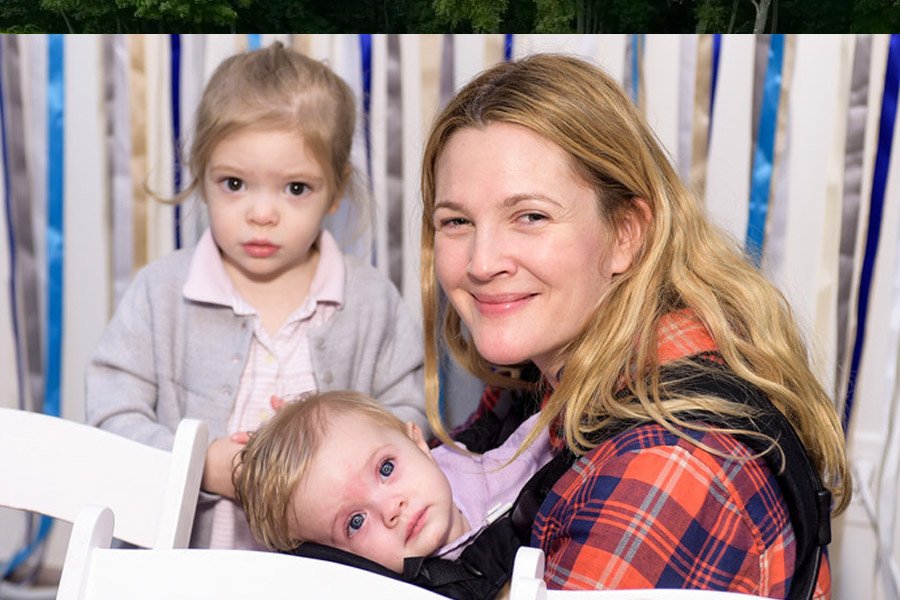
A child at the center of a larger map
I think of John Keats Kopelman as a small figure standing at the center of a wide, carefully drawn constellation. He is too young to have authored a public life of his own, yet his name already sits inside a network of history, taste, and social memory. That is often how family stories begin in public view. First there is a birth announcement, then a photograph, then a few shared details that settle into the record like fresh ink on thick paper. After that, the child becomes part of the family narrative before he can possibly shape one for himself.
What interests me most is not celebrity in the usual sense. It is the architecture around him. Families like this are built from layers. There are grandparents who helped establish the tone, parents who fused different worlds together, older children who made the household rhythm, and now a youngest child who changes the weather again. A family can be seen as a house, but I prefer the image of a garden path. Every new arrival bends the route slightly. The stones remain, yet the direction changes.
John’s name also carries a kind of quiet music. A first name that feels familiar and steady. A middle name that opens a window toward literature, art, and memory. A surname that links him to a public family line. Names can act like little lanterns. They do not decide a life, but they suggest the light under which it may unfold.
The meaning of being born into a blended family
I find blended families especially revealing because they show how love can expand without erasing earlier chapters. John Keats Kopelman arrived into a household already shaped by older sibling relationships, routines, and shared history. That matters. A new baby is never just a new baby. He is a new seat at the table, a new note in the chord, a new reason for everyone to re arrange the room.
Older siblings often become mirrors as much as companions. They show the younger child what is possible and what is ordinary. They create a living archive of firsts. First school day, first joke, first scraped knee, first holiday memory. In a blended family, those memories do not compete. They accumulate. That accumulation creates a texture that is richer than any simple family tree diagram can show.
I also think the presence of step and half sibling relationships teaches something useful about identity. It makes lineage feel less like a straight line and more like a river delta. Different channels feed one body of water. The result is not confusion. The result is depth.
Parents who live in adjacent public worlds
John’s parents come from distinct yet related public spheres. That alone makes the household interesting. One parent’s world is often associated with art, consulting, and design culture. The other is connected to fashion and editorial life. Together, those worlds suggest a home where style is not just appearance but language. Taste becomes a kind of weather. The furniture, the books, the gatherings, the photographs, even the silences, can all seem curated without being staged.
I am always cautious when people describe public families as polished, because polish can sound empty. What feels more accurate here is intention. There is a difference. Intention implies care. It means choosing what to show and what to keep private, how to honor family life without turning it into a performance. That balance is delicate. A family can become visible without becoming exposed. That is a skill, and not an easy one.
For a child like John, that environment matters because children absorb atmosphere before they absorb explanations. They learn how adults speak to one another, how they host, how they celebrate, how they protect. A home can be a library of behavior. Every gesture becomes a page.
The older generation and the weight of inheritance
Grandparents often represent the hidden beams of a family structure. They hold up rooms that newer generations may never fully notice. In John’s case, the paternal line carries a strong sense of public accomplishment, philanthropy, and cultural presence. That kind of inheritance is not only financial or social. It is symbolic. It tells the younger generation that family identity can be tied to institutions, to patronage, to civic life, and to a recognizable public standard.
I do not mean that inheritance decides destiny. It does not. But it creates a climate. Some families inherit land. Others inherit a city map. Others inherit obligations, expectations, and a language for how to move through elite circles with composure. John’s family background suggests precisely that sort of climate, one where cultural participation and social responsibility are part of the air.
The interesting thing about inheritance is that it works both as gift and echo. A child receives what came before, but also carries the echo of people he may only know through stories. That echo can be powerful. It can encourage continuity. It can also inspire reinvention. In that sense, inheritance is less a chain than a tide. It returns, but never in exactly the same shape.
The role of visibility in a child’s earliest years
A child who appears in family announcements and social posts enters the world of public attention in fragments. Not through a manifesto, but through snapshots. Not through a thesis, but through captions and congratulations. I find that interesting because the first public identity is often relational. It says who the child belongs to before it says anything about who the child is.
That kind of visibility can be gentle or intrusive depending on how it is handled. In the best version, it creates a ring of recognition around the child without forcing him to perform. The child is seen, not consumed. The family can share joy while still preserving a private center. That private center matters. It is where ordinary life lives, away from the bright bulbs of social circulation.
John’s public presence is still tiny, but even tiny presences shape perception. A new baby changes how a family describes itself. Suddenly the household becomes younger, broader, more layered. A sibling becomes an elder sibling. Parents become parents of more than one child. Grandparents receive another branch to hold. The public story becomes more intricate, and the private story grows roots.
Why names matter more than people admit
I have always believed names are small vessels carrying large meanings. John is a name with gravity. It grounds a child in something familiar. Keats, by contrast, feels more like a key than a label. It unlocks associations with literature, sensitivity, and art. Put together, the two names create a contrast I like very much. One is steady earth. The other is open sky.
A name does not create a destiny, but it can provide a vocabulary for family hopes. It can signal admiration, memory, or aesthetic preference. It can also act as a bridge between domestic life and public identity. In a family that already moves through cultural spaces, a name can feel almost like a calling card. Not in the shallow sense. In the sense of a handwritten note tucked into a book.
What matters is that a name becomes lived through use. It starts as choice and becomes habit. It is spoken by parents in kitchens, by siblings in hallways, by grandparents in stories, by friends at birthdays, by teachers later on. The name begins as a curated object and ends as a familiar sound.
The future as an unfinished room
I think the most honest way to talk about John Keats Kopelman is to recognize how little can truly be known at this stage, and how meaningful that still is. Childhood is a room still being built. Walls rise slowly. Windows appear. Furniture arrives. Some objects stay, some are replaced, and some are never mentioned again because they belong to moments rather than monuments.
For now, John represents possibility inside a family already rich with narrative. He is a reminder that even established families continue to expand, revise, and reinterpret themselves. The arrival of one child can alter the tone of every gathering. It can soften the older edges of a household. It can also sharpen attention to what came before.
I like that uncertainty. It feels alive. A child does not need a finished biography to matter. Sometimes presence is the story. Sometimes being held, named, and welcomed is enough to shift the entire frame.
FAQ
Who is John Keats Kopelman?
John Keats Kopelman is a young child born into a publicly visible family with ties to art, fashion, and philanthropy. His early life is mainly defined by family relationships rather than his own public activity.
Why is his name notable?
His first name is classic and steady, while his middle name carries literary resonance. Together, they give his full name a formal and thoughtful quality that feels carefully chosen.
What makes his family background interesting?
His family connects several different worlds, including art, fashion, media, and philanthropy. That gives his upbringing a layered cultural setting, even though he is still far too young to define it for himself.
Does John have siblings?
Yes. He has older half siblings and a younger brother in the household, which places him inside a blended family structure with multiple generational and sibling relationships.
Why do people pay attention to his family story?
Because the family already occupies a public space, each new child becomes part of a broader narrative about continuity, legacy, and identity. John is one small figure inside that larger and still evolving picture.
What does John represent at this stage of life?
He represents possibility, renewal, and connection. He is a new branch on an established tree, and the shape of that branch is only beginning to show.