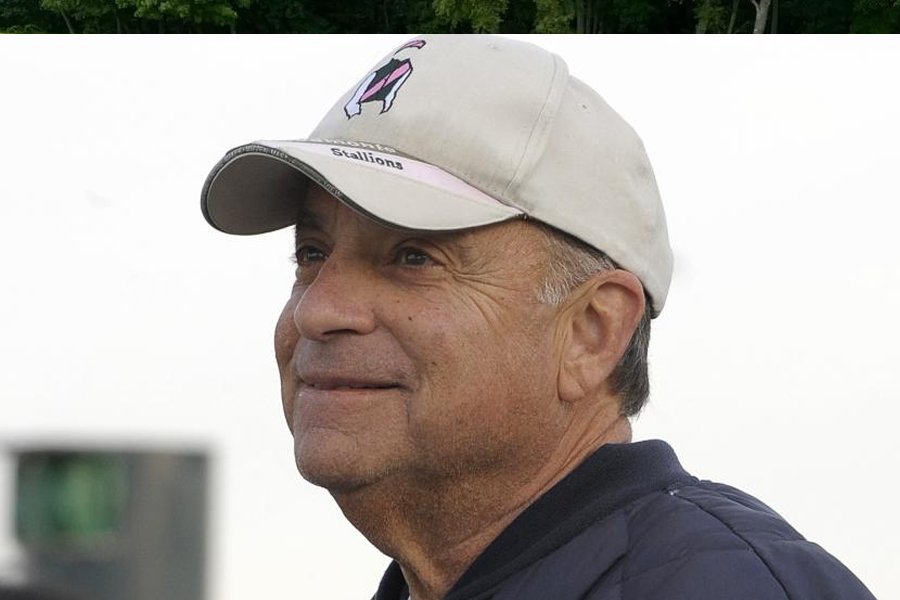
The Trainer Who Made Small Chances Look Like Big Money
I keep coming back to Robert J Frankel because his story is not just about wins. It is about leverage. He seemed to understand something most people miss: in horse racing, value often hides in plain sight. A horse that looks ordinary on the page can become a blade in the right hands. A modest claim can turn into a stakes horse. A forgotten runner can become a headline. That was Frankel’s genius. He did not merely train horses. He found angles.
What makes Robert J Frankel so compelling is the way he stood at the crossroads of instinct and calculation. Racing has always attracted dreamers, but Frankel was a dreamer with a ledger in one hand and a stopwatch in the other. He knew the track was a marketplace, a theater, and a laboratory all at once. Some trainers rely on charisma. Others lean on volume. Frankel built a reputation on judgment. He treated a horse like an unfinished sentence and knew how to supply the right ending.
A Career Built on Sharp Eyes and Hard Surfaces
I see Frankel’s rise as a study in patience under pressure. He did not arrive in the sport with a polished pedigree or a smooth path. He came up through the hard edges of racing, where mornings are cold, labor is constant, and progress is measured in fractions of a second. That background matters because it explains his edge. He understood the backstretch from the ground up. He knew what it meant to work close to the animal, not just around the money.
His California years are especially important. When he settled into the West Coast scene, he did more than adapt. He helped define it. California racing has often rewarded trainers who can keep horses fit, flexible, and ready for a long season of shifting surfaces and big stakes. Frankel fit that environment like a key in a lock. His stable became a machine with a human pulse. The operation was disciplined, but it never felt mechanical. There was always the sense that he was reading the race before it was run.
I think that is why his name still carries weight. People remember the total wins and the earnings, but the deeper memory is style. Frankel did not train like a factory line. He trained like a strategist at a chessboard where every piece had muscle, lungs, and a temper.
The Business Side of Being Brilliant
There is another layer to Robert J Frankel that deserves attention: he understood the economics of racing as well as the horsemanship. In a sport where many barns chase glamour, he knew how to convert opportunity into return. That is rarer than it sounds. A trainer can have talent and still fail to build a sustainable engine. Frankel had the uncommon ability to make owners feel that their investment was in capable hands. That trust became part of his power.
I also think his career reveals how racing success is never just about one horse. It is about the structure around the horse. Feed programs. Staff confidence. Stable routine. Timing. Placement. Recovery. Frankel’s results suggest a mind that could hold all of those variables at once without losing the plot. That is not luck. That is architecture.
And there is something almost tidal about the way a trainer’s reputation grows in this sport. One strong season can ripple outward. One brilliant decision can change the value of a horse, a client relationship, even a whole barn’s mood. Frankel seemed to ride those waves without being swallowed by them. His work had the texture of weathered stone. It looked effortless from far away, but only because years of pressure had already shaped it.
Family, Distance, and the Human Cost of Ambition
I do not think it is possible to talk honestly about Robert J Frankel without acknowledging the strain that often shadows high achievement. Great careers can cast long family shadows. Racing is a hungry profession. It takes mornings, evenings, holidays, and emotional bandwidth. The people around a star trainer often learn to live with absence as a kind of household furniture.
That is one reason his family story stays with people. It reminds me that success does not always arrive wearing clean gloves. It can be messy, uneven, and emotionally expensive. Frankel’s bond with his daughter became part of the public conversation because it felt real, not polished. There was distance, then repair. There were old wounds, then a measure of peace. That sequence matters. It gives the man behind the statistics a human outline.
I also find the later chapter of his life telling. Even as illness narrowed his world, he remained defined by loyalty. His attachment to animals was not decorative. It was central. He seemed to respect the quiet contract between handler and horse, between caregiver and vulnerable creature. That sense of responsibility gives his legacy moral shape. It suggests that his toughness was never meant to cancel tenderness.
Why His Legacy Still Moves Through the Sport
When I look at racing now, I can still feel Frankel’s influence in the background. You see it whenever a trainer talks about horse welfare as more than a slogan. You see it whenever a stable chooses patience over forcing a result. You see it in the belief that a horse’s talent should be uncovered, not squeezed dry. Frankel’s legacy is not confined to a plaque or a renamed stakes race. It lives in habits.
The sport itself has changed, of course. New owners, new training methods, sharper data, stronger scrutiny. But the basic challenge remains the same: identify what a horse can become and create the conditions for that becoming. Frankel was a master of that transformation. He worked in a world where the margins were thin and the rewards were enormous. He made the most of those margins. He wrung value from uncertainty like water from stone.
His afterlife in the sport is visible in the races, the honors, and the stories people keep telling. But the deeper legacy is less flashy. It is the standard he set for adaptability. A trainer should not just manage horses. A trainer should understand change, absorb pressure, and still find the winning move. That is the Frankel lesson.
FAQ
Who was Robert J Frankel beyond the numbers?
Robert J Frankel was a trainer who blended instinct, discipline, and a shrewd eye for value. His reputation grew not only from victories, but from the sense that he could see potential where others saw ordinary stock.
What made his training style stand out?
I think his style stood out because he treated each horse as a separate puzzle. He was not known for one noisy formula. He was known for reading the animal, the conditions, and the moment, then adjusting with precision.
Why is his California chapter so important?
California was where his approach fully flowered. The racing landscape there rewarded consistency, tactical placement, and depth of stable management. He thrived in that setting and became one of the defining figures of the circuit.
How did his legacy continue after his death?
His legacy continued through race names, Hall of Fame recognition, and the way modern racing talks more openly about horse care and long-term development. His name still signals excellence with a practical edge.
What makes Robert J Frankel relevant to readers today?
He matters because his career shows how expertise can turn hidden potential into lasting value. That lesson reaches beyond racing. It is about seeing clearly, working patiently, and refusing to confuse noise with talent.