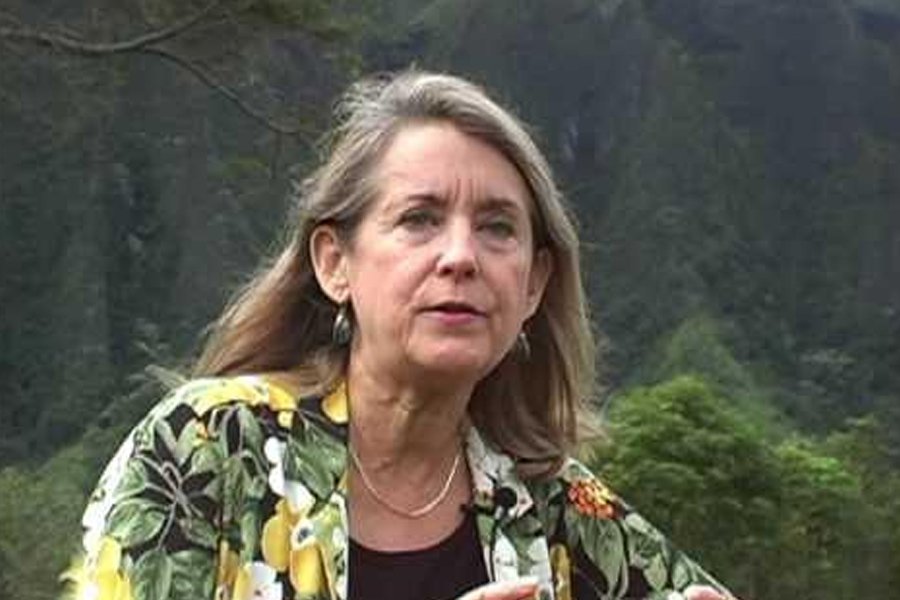
A city hall story built on ledgers, steel nerves, and timing
When I think about Kathy Whitmire, I do not picture the usual political costume. I picture a ledger book, a city budget spread open like a weather map, and a woman standing at the center of a storm with a pencil in hand. Houston was not handed a ceremonial mayor in the 1980s. It got someone who understood numbers, institutions, and the blunt force of administration. That mattered. In a city that often grows faster than its own self-understanding, Kathy Whitmire made competence feel like a form of ambition.
Her rise was not loud in the way some political ascents are loud. It was more like a bridge being assembled beam by beam while traffic kept moving overhead. She came out of accounting, not machine politics. She carried the habits of audits, precision, and restraint into a job that usually rewards volume and spectacle. That combination gave her a different kind of authority. She did not need to perform seriousness. She had already built it into her posture.
From Houston roots to public office
Kathy Whitmire was shaped by Houston, but she was not shaped by Houston’s easiest myths. She came from a working family background and moved through the University of Houston with a practical intelligence that seems almost old-fashioned now. The public record places her at the intersection of education and discipline: undergraduate study, graduate study, professional accounting work, then public office. That sequence matters because it explains her style. She did not arrive in city government as an ideologue looking for a stage. She arrived as someone who had already learned that every system has a balance sheet, even when nobody wants to admit it.
I find that origin story especially compelling because it makes her political career feel less like a sudden leap and more like a long extension of a pattern. Numbers were never just numbers for Kathy Whitmire. They were evidence. They were leverage. They were the grammar of trust. When she was elected Houston City Controller, she became the first woman to hold a citywide office in the city, and that milestone was not a footnote. It was a crack in an old wall. Sometimes history moves with a speech. Sometimes it moves with a woman who knows how to read a budget better than the men around her.
The mayoral decade and the machinery of reform
The mayoral years are where Kathy Whitmire’s name became welded to Houston’s civic memory. Five consecutive two-year terms gave her a decade of power, and a decade in city government is enough time to change the shape of the room. She campaigned on fiscal discipline, transparency, and management reform. Those are not glittering phrases, but in practice they can be revolutionary. A city is a living machine. If the machine is badly tuned, the leak is not always visible until the floor is already wet.
Her administration leaned into modernization. She pushed for tighter budgeting and a more professional style of governance. That sounds dry only if one has never lived inside a city that is tangled in delay, waste, and inertia. In that environment, efficiency is not a luxury. It is a public good. Kathy Whitmire understood that the city itself could become either a mirror of confusion or a model of order. Her instinct was to make it the second thing.
There was also a symbolic power to her leadership. I think that matters as much as any specific policy. When a city elects its first woman to a citywide office, then elevates her to mayor, something deeper shifts than the occupant of a desk. Possibility changes shape. Young people notice. Bureaucracies notice. Political gatekeepers notice. Even people who never liked her had to adjust to the fact that Houston had chosen a different kind of leader, one who treated management as a moral language rather than a backstage chore.
Private life, public life, and the quiet edges of the record
What stands out to me in Kathy Whitmire’s personal story is how spare the public record feels. That sparsity can be read as privacy, but it also creates a certain elegance. Her first husband, James M. Whitmire, was part of her early adult life and died in the 1970s. Later she married Alan J. Whelms. Beyond that, the record seems to resist becoming spectacle, and I respect that. Not every life needs to be made into an exhibit with bright lights and explanatory labels.
Family histories often become cluttered when public people are involved. In her case, the names that surface are clean and few. Her father, listed in different materials with slightly different spellings, and her mother, Ida, appear as the kind of parental presence that anchors a biography without overwhelming it. A brother-in-law connected her family to another political name in Texas, which is a reminder that public life tends to braid itself through families whether they asked for it or not. Still, the center of gravity remains Kathy Whitmire herself. Her story is not a dynasty tale. It is a professional one.
I also think the uncertainty around some biographical details, even small ones such as her birth date in different accounts, is revealing in its own way. It shows how public memory can be messy. It also shows how easily a person’s life can become a patchwork of archives, summaries, and recollections. In that sense, Kathy Whitmire’s biography feels like a city map with a few roads redrawn over time. The destination is clear even if the lines are not all identical.
The hard politics beneath the polished image
A city manager image can make a politician look calm, almost frictionless. That is never the full story. Kathy Whitmire operated in an era when urban policy was deeply contested and often personal. Public health debates, transit arguments, and crime concerns all pressed against her administration. The public conversation around a mayor rarely stays in one lane, and hers did not either. The way I read it, her strength as an administrator sometimes collided with the emotional temperature of the city around her.
That is a common fate for reformers. They build systems, and then the systems get judged through the weather of the moment. If the public wants a savior, a manager can look cold. If the public wants certainty, a technocrat can look cautious. Kathy Whitmire seems to have lived in that tension for years. Her political defeats and controversies do not erase her achievements. They make them legible. Governing is not a clean staircase upward. It is a staircase in a wind tunnel.
Her role as president of the U.S. Conference of Mayors also widened the frame. It placed her in a national urban conversation, not just a Houston one. That is important because city leaders often matter most when they stop being local symbols and become participants in a larger argument about how American cities should function. Kathy Whitmire’s voice was part of that discussion, and it was the voice of someone who believed cities should be run with fewer excuses and more accountability.
After City Hall, the long second act
I am interested in what happens after the spotlight narrows. For Kathy Whitmire, the later years brought teaching, nonprofit leadership, and civic work in Hawaii. That shift feels almost like a change of climate. The pressure of municipal combat gives way to a steadier horizon. In classrooms and nonprofit organizations, she could still use the same core instinct that defined her public life: organize the work, clarify the mission, respect the numbers, and do not confuse noise with significance.
Her move to Hawaii and later civic involvement there suggest a life that did not stop after City Hall. Some political figures become frozen in the year of their most famous election. Whitmire did not. She continued to reinvent her role, which is a skill as valuable as winning office in the first place. In a quieter setting, she became part of environmental and civic efforts, the sort of work that rarely produces dramatic headlines but often shapes the texture of a community more than a single speech ever could.
That second act matters because it keeps her from being reduced to a historical snapshot. She was not just a mayor. She was an educator, a nonprofit executive, and a civic participant after the cameras moved on. That arc has a graceful symmetry. The woman who once balanced a city budget later balanced public life in a different register.
Legacy in a city that never stops changing
Kathy Whitmire’s legacy in Houston is not only about the offices she held. It is about the style of leadership she normalized. She helped make managerial competence feel public, not hidden. She showed that a mayor could speak the language of reform without sounding like an abstract theorist. She also showed that women could lead Houston at the highest level and not be treated as temporary visitors to the room.
Houston itself has changed so much since her years in office that it can be difficult to remember how radical her presence once was. But cities keep their memory in layers. Under the glass towers and freeway ramps, there are older civic habits, older arguments, older victories. Kathy Whitmire belongs in that sediment. Her time in office left marks on administration, political expectations, and the way Houston imagines its own leadership.
FAQ
Who is Kathy Whitmire?
Kathy Whitmire is an American public figure best known for serving as Houston city controller and later as mayor of Houston. She became the city’s first woman elected to a citywide office and then spent a decade in the mayor’s office.
What made Kathy Whitmire different as a mayor?
What stood out to me was her accounting background. She approached government like a system that could be measured, repaired, and improved. That gave her a reputation for discipline, fiscal restraint, and management reform.
Did Kathy Whitmire have a life outside politics?
Yes. Her life extended well beyond City Hall. She moved into teaching, nonprofit leadership, and civic work, including later involvement in Hawaii. That second act gave her public life a broader horizon.
What do we know about Kathy Whitmire’s family?
The public record identifies her parents, her first husband James M. Whitmire, and her later husband Alan J. Whelms. Her family story is relatively private and spare, which makes the documented details feel even more deliberate.
Why is Kathy Whitmire historically important?
She mattered because she changed the shape of Houston’s political leadership. She broke ground as the city’s first woman to win a citywide office, then used her time as mayor to push administrative reform and raise the standard of civic management.
What kind of legacy did Kathy Whitmire leave in Houston?
Her legacy is part practical and part symbolic. She left behind a reputation for stronger administration, tougher budgeting, and a broader sense of who could lead one of America’s biggest cities.
How To Choose A Parking Garage Without Losing Your Mind
Making Diaphragm Birth Control Work For You
How Commercial Foundations Keep Buildings Standing Tall