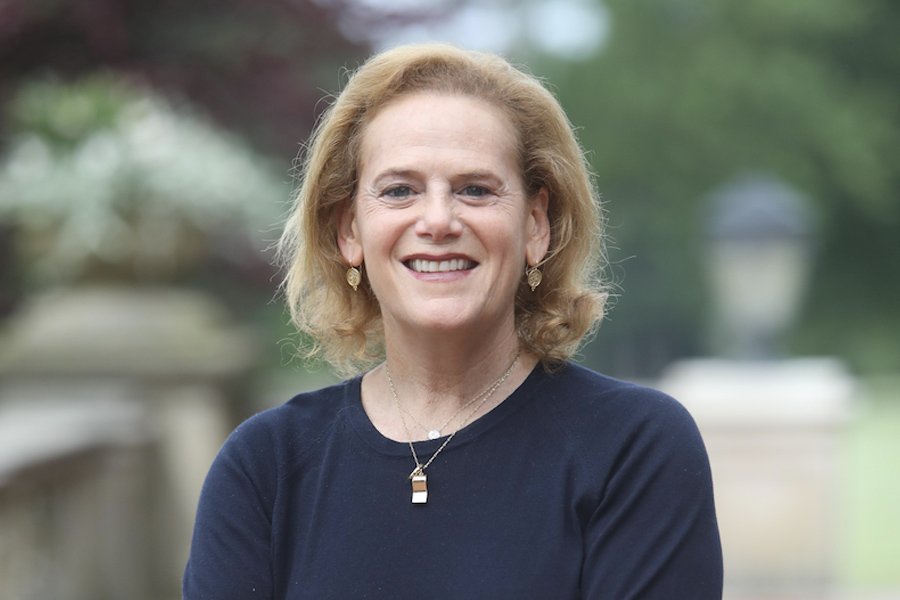
A life shaped by motion
Jennifer Zonis stands out because her story does not sit still. It moves with purpose, crossing from media into public service, from family legacy into community presence, from private competence into visible civic work. That kind of life has a distinct texture. It is less like a framed portrait and more like a road map, marked with turns, crossings, and destinations that only make sense when viewed together.
Her path suggests someone who learned early that identity can be built in layers. A person can be a professional, a neighbor, a parent, and a public participant all at once. Jennifer Zonis appears to have understood that well before many people do. Her public life reflects a rare balance of polish and practicality, a blend that gives her presence weight without making it rigid.
Early foundations and a wide horizon
Jennifer Zonis grew up in New Canaan, Connecticut, a town that often seems calm on the surface but rewards people who pay attention. It is the kind of place where roots matter, where schools, families, and civic institutions create long memory. Her education at New Canaan High School and later Harvard College points to a disciplined path, but the real story is not simply academic achievement. It is what those milestones made possible.
Education can be a key, but it can also be a compass. For Jennifer Zonis, it seems to have been both. The move from a close knit hometown to a major university and then into the fast moving world of media suggests a person willing to test her abilities in larger arenas. That willingness matters. It is the difference between waiting for life to arrive and stepping toward it.
New Canaan likely gave her steadiness. Harvard likely gave her range. Together, they created a foundation that could support both speed and substance, both ambition and restraint. Her biography has the clean lines of a well drawn architectural plan, but the rooms inside it are full of lived experience.
Building a career where stories travel fast
Jennifer Zonis began her professional life in a world where timing, judgment, and presentation matter. Media and publicity are demanding fields. They reward people who can read an audience, understand tone, and move quickly without losing accuracy. Her work at CBS News and later in film publicity placed her at the intersection of communication and culture, where images and messages compete for attention like signals in the night.
That kind of work is not only about glamour, despite appearances. It requires pressure tolerance, discretion, and an instinct for how narratives spread. Publicity is part strategy, part choreography. When done well, it feels invisible even as it shapes what millions of people see. Jennifer Zonis operated in that space, contributing to the machinery that helps stories become events.
Her career also reflects flexibility. She did not remain locked into one narrow lane. She moved through cities, industries, and roles, including time spent freelancing in London and working in Hong Kong. That international dimension matters because it shows adaptability. Some people collect job titles. Others collect perspective. Jennifer Zonis appears to have done both.
Returning home with experience in hand
Many people leave their hometowns and never return except for visits. Jennifer Zonis came back to New Canaan, and that return gives her story a full circle quality. But it was not a retreat. It was a reentry. She returned with experience, networks, and a sharper understanding of how public life works. That kind of homecoming often changes a person. The town remains familiar, but the returning resident has been altered by distance.
A person who comes back after years away often sees local life with clearer eyes. Small decisions matter more. Institutions become tangible. Relationships carry history. Jennifer Zonis seems to have brought that expanded view into her civic participation, where the focus shifts from audiences and campaigns to neighbors and community needs.
This is where her story becomes especially interesting. The skills of media work and the habits of civic work are not identical, but they overlap in useful ways. Both require listening. Both require judgment. Both depend on trust. One manages visibility, the other manages responsibility. Jennifer Zonis appears to have moved gracefully between the two.
Civic engagement as a form of daily craftsmanship
Community life is often built by people who do not seek applause. They show up. They volunteer. They serve on boards, support local institutions, and keep the civic fabric from fraying. Jennifer Zonis fits that model. Her involvement with local and educational organizations suggests a steady commitment rather than a temporary burst of interest.
That kind of participation may not always draw headlines, but it changes a place in durable ways. Schools become stronger. Charitable groups gain energy. Interfaith work fosters connection across difference. Youth programs widen possibility. Civic engagement can feel like tending a garden. The work is repetitive, but the results are living, visible, and cumulative.
Jennifer Zonis also brings a particular kind of credibility to that space because her background is not limited to one sphere. She understands communication, but she also understands community. She knows how public impressions are formed, but she also knows that real trust is earned slowly. In local life, that matters more than style. It is the difference between performing concern and practicing it.
Family legacy and the shape of inheritance
Jennifer Zonis is part of a family whose name carries artistic and public recognition. That kind of inheritance can open doors, but it can also create expectations. To grow up in such a family is to live with visible history. Some people are overshadowed by that. Others use it as structure. Jennifer Zonis appears to have done the latter.
A public family background can teach several lessons at once. It can normalize being observed. It can demonstrate the discipline required behind performance. It can show that public identity is built over time, not granted all at once. Jennifer Zonis’ family story adds depth to her own because it suggests she inherited not only a recognizable name, but a working knowledge of visibility, craft, and responsibility.
What makes her story more compelling is that she did not merely remain within the orbit of that family identity. She extended it into new directions. Her own path, especially in civic and community life, is not a copy of what came before. It is a separate branch on the same tree, reaching toward different light.
The texture of a modern public life
There is something especially modern about Jennifer Zonis’ public identity. She represents a kind of life that does not split neatly into categories. Career and family. Professional world and hometown. Public recognition and local service. These are not separate compartments in her story. They overlap like translucent paper, each layer visible through the next.
That complexity gives her biography depth. She is not only a former media professional. She is not only a civic participant. She is not only the daughter of a well known family. She is the sum of those roles and the movement between them. The result is a life that feels both grounded and far reaching.
Her story also suggests an important truth about public reputation. The most enduring lives are often the ones that combine competence with continuity. Jennifer Zonis seems to have built hers on that principle. She has moved through different worlds without losing coherence. That is no small achievement. It takes judgment to change settings without losing yourself.
Reading Jennifer Zonis through the lens of community
The most useful way to think about Jennifer Zonis may be as someone who translates experience into participation. She did not simply gather credentials and drift forward. She appears to have converted professional skill into civic contribution, family heritage into personal direction, and movement into rootedness. That process gives her story a strong internal logic.
In a town like New Canaan, a person such as Jennifer Zonis can become part of the connective tissue that holds institutions together. She is the sort of figure who may be seen at meetings, heard in discussions, and remembered for being present when local work needs care. Presence itself becomes a kind of service. It says, I know this place, and I am still willing to invest in it.
That commitment has a quiet authority. It is not loud, but it is steady. Like a bridge bearing traffic, it matters most because it holds.
Choosing The Right Manager For Rentals And Homeowner Communities
When Your Pet Turns Dinner Into A Detective Mystery
Park City Comes Alive Through Art Music And Mountain Culture