A first look that is not the whole story
When I first noticed Frank Paytas in the periphery of online life, he read to me like a soft-focus photograph inside a glossy magazine. You see the outline, the expression, a hand resting on a hip, and you begin to invent the rest. I am drawn to those outlines. I study what people leave visible on purpose and what they leave visible by accident. Frank Paytas exists in that narrow seam between deliberate exposure and private reserve. He is not absent. He is instead a presence that resists being reduced to a single narrative.
What visibility can and cannot tell us
I have watched public moments accumulate into an impression. A single red carpet appearance. A clip where he answers a question with a laugh. A small social account that posts a family photo now and then. Taken alone, each moment is a bright dot. Together, those dots form a constellation. But constellations are only useful if you do not mistake them for maps. The brightness of a dot does not equal the depth of a life.
For Frank Paytas, visibility is mainly relational. He becomes legible in the context of family milestones. When his daughter steps into a larger frame, his outline is revealed in a new light. That does not make his private self public. It does, however, reorder how people interpret him. I am interested in that transformation. How does someone who has opted for a contained life navigate the echoes created by a family member who occupies millions of attention hours? The answer lives in small acts: showing up at an event, appearing in a clip, smiling in a photograph. These are gestures that ripple outward.
The role of the steady presence
There is a human hunger for origin stories. We want to know who anchors the show behind the star. Yet anchors can be invisible by design. I think of Frank Paytas as a backstage stagehand who occasionally steps into the footlight. When he does, the crowd notices. The crowd is curious. But stepping into the light is not the same as taking up a career in limelight. It is a choice to be present for family rather than for headlines.
I have followed narratives like this before. In many cases, family figures become shorthand for moral commentary, for nostalgia, for contrast. That shorthand simplifies complex relationships into digestible sound bites. I resist that simplification. Presence and personhood are not the same as biography. I want to describe what I see without flattening it into speculation.
New family chapters and what they mean
Family evolves. New arrivals arrive like punctuation marks in an ongoing sentence. When grandchildren appear, the original sentence stretches to include additional clauses. In public life, grandchildren often become a gentle recontextualization. They shift attention from reputation to lineage, from career to continuity.
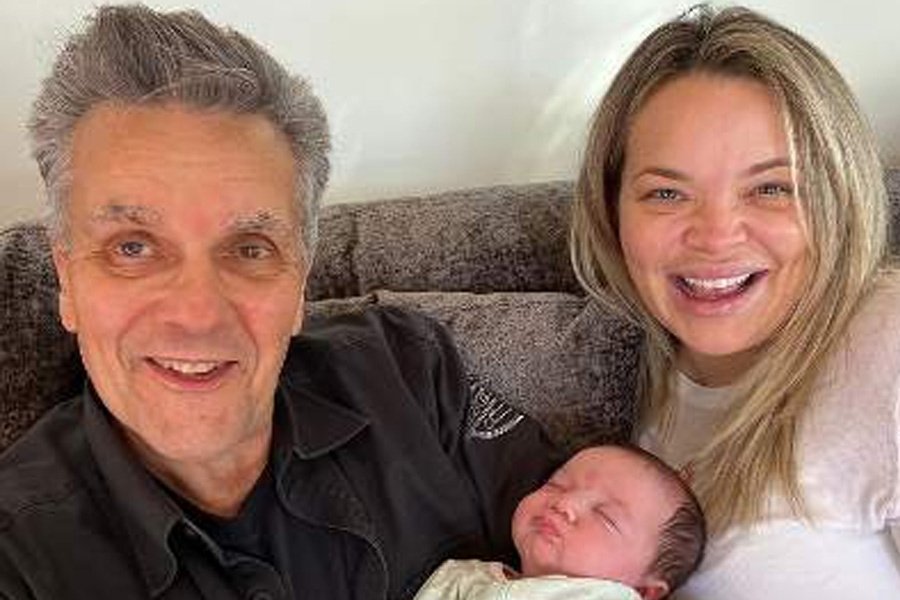
For someone like Frank Paytas, the grandchild function is not merely familial. It is a lens that invites viewers to consider time and legacy. The role of a grandfather in the public imagination is softer, more protective. It is also more personal than celebrity. I find that the addition of new family members complicates how we interpret past appearances. A smile in a clip takes on a different valence if you imagine the interplay of grandparents and grandchildren off camera.
Money, rumor, and the ethics of speculation
I do not enjoy repeating unverified financial claims. The internet is a rumor factory that polishes numbers until they glitter. I choose to look at that glitter and remind myself of what counts as evidence. Public figures who are primarily known through relation often become the subject of economic guesswork. Why? Because money is a neat proxy for importance in a culture that prizes measurable success.
When I consider Frank Paytas, I prefer the concrete over the conjectural. A public appearance is a fact. A viral post is a fact. A precise net worth number without documentation is not. I think the ethical approach is to acknowledge the empty space where records should be and to treat repeated numbers as what they are: repetitions, not confirmations.
How media framing shapes the small stories
I have watched journalists and creators reduce complex people to motifs. With Frank Paytas, the motif tends to be supportive parent. That is not wrong. It is however incomplete. People are made of contradiction. They possess histories that cannot be squeezed into a single line. Media frames are useful shorthand. They are also a form of compression that can erase texture.
I try to read between frames. When Frank appears on a carpet, I notice the posture, the way he positions himself near family, the manner of his smile. Those are tiny data points that say more about presence than any declarative headline. Over time, those tiny points accumulate into a human portrait that is not the same as a biography. It is impressionistic. It is true in a different register.
The value of remaining partly private in a noisy world
Privacy is a form of agency. Choosing what to expose is a kind of speech. For an individual who is adjacent to a major attention economy, retaining parts of private life is a deliberate act. I respect that act. There is a dignity in being known for who you are to the people closest to you rather than for what strangers can project onto your image.
In my own reflection, I think about how we tend to demand total transparency from people who have done nothing to deserve that demand. We ask for birth dates, career ledgers, and financial documents as if every life needs to be filed and indexed. Not every life wants that. Not every life should be subject to public accounting.
A small catalog of public moments
I have collected impressions rather than exhaustive lists. A handful of public appearances. Short interviews where he speaks or is spoken about. A social handle with occasional family photographs. These are the bones of a public footprint. They are interesting for what they reveal and for what they conceal. I do not treat them as definitive proof of anything beyond the fact that he shows up, sometimes, in public contexts.
FAQ
Who is Frank Paytas?
Frank Paytas is a family figure who appears in public primarily through his relationship with his daughter. He surfaces in interviews, social posts, and occasional event appearances. His public identity is relational rather than career based.
Is Frank Paytas on social media?
Yes. There are small social presences that post family photographs and occasional updates. These accounts are modest in activity compared with major public figures.
Does Frank Paytas have a documented career history?
No comprehensive, authoritative career timeline is publicly available. His public appearances focus on family context instead of an independent professional biography.
Are financial claims about Frank Paytas reliable?
Repeated numbers circulate online, but without verifiable documentation they remain unconfirmed. I treat such claims as speculative.
Why is there limited personal information about him?
He appears to maintain a private life outside the reach of continuous media scrutiny. Privacy can be a deliberate choice rather than an absence of story.