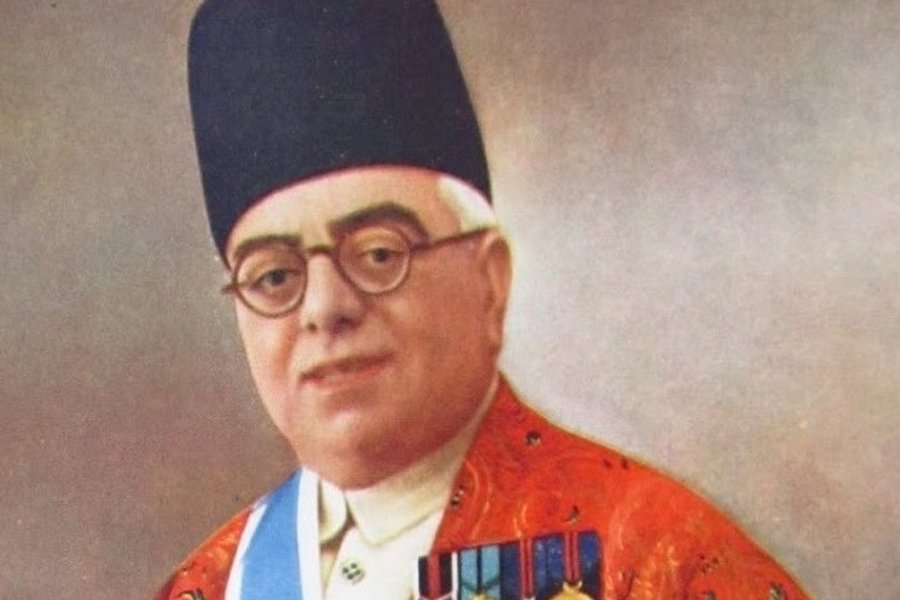
A life that began before childhood ended
When I think about Aga Sultan Mahomed Shah Aga Khan, I do not picture a man standing still in history. I picture motion. He was born into authority, but he did not merely inherit it as a label. He turned it into a living instrument. As Aga Khan III, he carried the weight of spiritual leadership from the age of seven, yet his life moved outward into politics, education, diplomacy, and public imagination. That combination makes him unusual. He was both rooted and mobile, like a tree whose branches learned to travel.
What fascinates me most is not only that he became Imam so young, but that he grew into the role without allowing it to become narrow. He did not remain inside one sphere. He moved across continents and institutions. He spoke to the needs of a community, but he also spoke to the anxieties of an age shaped by empire, reform, war, and political awakening. His life belongs to the history of the Ismaili Imamat, but it also belongs to the wider story of the modern Muslim world.
The global stage behind the private office
Aga Sultan Mahomed Shah Aga Khan is often remembered first as a religious authority, yet that is only the door to the house. Inside were rooms that opened onto the larger world. He became deeply involved in the political currents of British India, especially in Muslim organization and constitutional debate. He was among the important voices pushing Muslims toward political self-awareness at a time when representation mattered as much as rhetoric.
I find it important that his influence was not only symbolic. He took part in practical politics, in meetings, conferences, and negotiations that shaped the direction of public life. He was active in the Round Table Conference era and in international forums where the future of nations was being argued over like a map on a table. He did not drift into modernity. He stepped into it with intent.
His presidency of the League of Nations in 1937 placed him on a world stage few religious leaders ever reached. That mattered because it showed how his identity traveled beyond inheritance. He was not treated simply as a cleric from South Asia. He was seen as a figure of international consequence. In that sense, he became a bridge. One end of the bridge stood in community life. The other reached into global diplomacy.
Education as a form of leadership
One of the most enduring aspects of Aga Khan III’s public life was his commitment to education. I see this as one of the clearest signs that he understood leadership as construction rather than display. He did not merely preside over a community. He helped build the conditions under which the community could expand its mind.
His support for modern education helped strengthen Muslim educational advancement in India. He was associated with the broader movement that elevated Aligarh Muslim College into Aligarh Muslim University in 1920, a transformation that carried symbolic and practical force. Educational institutions are often quiet in the moment and thunderous in hindsight. They do not always announce their importance when they begin to rise. But later, they stand like lighthouses.
I think his educational vision matters because it was not abstract. It had shape. It had budgets, schools, networks, and long-term outcomes. He understood that a community without education can become a prisoner of its own memory. His answer was not to abandon tradition. It was to equip tradition to speak in a modern register.
A family life shaped by continuity and change
Aga Sultan Mahomed Shah Aga Khan’s family story is more than a list of marriages and descendants. It is a map of alliances, tragedies, and continuities. His marriages reflected different phases of his life, and his children carried different parts of his legacy into new worlds. In that sense, the family itself became a kind of relay race, with each generation taking up a torch and running into a different century.
His sons and descendants made the family name visible in public life in ways that extended beyond his own era. Aly Khan became a figure of international prominence. Sadruddin Aga Khan took on humanitarian and diplomatic work that brought its own kind of honor. Prince Karim Aga Khan IV continued the line of Imamat, and that succession gave the family continuity at the center of Ismaili history.
What I find especially striking is that the family legacy did not remain confined to formal leadership. It spread into culture, philanthropy, diplomacy, and public service. Some families preserve their name like a museum object. This one kept moving. That movement is part of the story.
The Aga Khan Palace and the memory of India
There is also a powerful symbolic layer to Aga Khan III’s legacy in India that deserves more attention. The Aga Khan Palace in Pune is not only tied to his name. It became part of the national memory of India through the imprisonment of Mahatma Gandhi, Kasturba Gandhi, and others during the Quit India period. That association gives the palace a weight that extends beyond architecture. It is not just a building. It is a vessel of political memory.
I think places like this matter because they remind us that personal histories and national histories often touch at unexpected points. A name that began in spiritual leadership came to be linked with one of the most important political struggles in India. That kind of overlap is rare. It shows how power can leave traces in stone, not just in documents.
Money, patronage, and institution building
When people talk about wealth in relation to Aga Khan III, the more interesting story is not luxury. It is structure. He used resources in ways that fed institutions rather than spectacle. That is a significant distinction. Wealth can shine like jewelry, or it can work like scaffolding. In his case, the scaffolding is what matters most.
He supported charitable giving, education, and community development. He helped cultivate financial structures that strengthened social mobility and long-term resilience. Cooperative systems, insurance efforts, and organized philanthropy formed part of the ecosystem around his leadership. That kind of work rarely makes a dramatic entrance, but it changes lives in durable ways.
I am especially drawn to this because it reveals a practical mind beneath the ceremonial surface. Aga Khan III was not simply a public symbol. He was a builder of frameworks. He knew that institutions outlast speeches. A speech may rise and fall like a flame in wind. A structure can hold heat for generations.
Final years and lasting resonance
His later life also carried a sense of transition. He remained important, but he was also preparing the ground for succession and memory. His death in Switzerland in 1957 marked the end of a remarkable era, but not the end of the story. His burial and later reburial beside the Nile in Aswan gave his memory a resting place shaped by elegance and symbolism. Even in death, his life seemed arranged across geographies.
What continues to draw me toward Aga Sultan Mahomed Shah Aga Khan is the way he inhabited several identities without dissolving into any one of them. He was Imam, reformer, diplomat, writer, patron, father, and public figure. He moved through an age of empire and nationhood with a kind of disciplined grace. He did not escape history. He helped steer through it.
FAQ
Who was Aga Sultan Mahomed Shah Aga Khan?
He was Aga Khan III, the 48th Imam of the Nizari Ismaili Muslims, and also a major political, educational, and diplomatic figure. I see him as someone who shaped institutions as much as he shaped ideas.
Why is he important beyond his religious office?
He played a major role in Muslim political organization in British India, supported education, took part in international diplomacy, and helped build lasting community institutions. His influence reached far beyond one community or one country.
What is the significance of his role in education?
He supported modern education and helped create momentum that led to Aligarh Muslim University. That work helped transform education into a tool of collective advancement, not just individual success.
How did his family continue his legacy?
His descendants continued the Imamat and also became active in diplomacy, philanthropy, culture, and humanitarian work. The family line remained visible not just as inheritance, but as service.
What is the Aga Khan Palace connection?
The Aga Khan Palace in Pune became historically important because Gandhi and other leaders were held there during the Quit India period. That made the site part of India’s political memory as well as Aga Khan III’s legacy.
Why does Aga Khan III still matter today?
Because his life shows how leadership can combine faith, reform, education, and public service. He was not trapped in one role. He treated leadership like a living current, always moving, always shaping the bank it touched.
Making Westfield Cleanup Less Chaotic With The Right Dumpster
How Contractors Become The First Call In Their Service Area
Building A Va Disability Claim That Survives A Close Review
When Your Smile Is Telling You More Than You Think
Give Your Home A Makeover Without Setting Your Wallet On Fire